A mobile windshield replacement should feel straightforward: a trained technician arrives, sets up a small workspace, removes the broken glass, preps the frame, installs the new windshield, and leaves you with clear sightlines and a safe car. Weather is what complicates the picture. Moisture, temperature swings, and wind change the materials and the working conditions just enough to affect how the adhesive cures, how the trim seats, and how long you need to wait before driving. The job can still be done correctly in less-than-ideal conditions, but it takes planning and a few smart adjustments.
I’ll lay out what matters before the technician arrives, how weather changes the installation itself, and what you should do in the hours and days afterward. I’ll also cover how to get a trustworthy windshield quote, what “mobile service” looks like when you search for auto glass near me, and where it makes sense to push for a shop visit instead of a driveway appointment.
Why weather changes the job
Polyurethane adhesives bond your windshield to the vehicle’s pinch weld. That bond carries airbag loads, resists torsion as the car flexes, and keeps the roof structure stable in a rollover. Almost every modern urethane uses moisture to cure and harden. Temperature affects the rate and final properties of that cure. So does the cleanliness and temperature of the glass and the body. Humidity can help, but liquid water on the bonding surfaces is a problem. Wind introduces dust and pollen that weaken adhesion. Sun can overheat the glass, which sounds benign until thermal shock or differential expansion enter the picture.
Manufacturers publish safe drive-away times for their urethanes. You’ll see numbers like 30 to 90 minutes at 70 degrees Fahrenheit and 50 percent relative humidity. Those times lengthen in cold, shrink in warm and moderately humid air, and can vary with how much adhesive is dispensed. That’s why a good technician checks both the ambient conditions and the product data sheet, then explains your wait time with context, not guesswork.
What to do before the truck pulls up
Your role starts with site prep. Think of the technician as a craftsperson who needs a clean, controlled corner of your day.
- Clear a flat parking space large enough for the vehicle and a work perimeter, ideally level and free of sprinkler overspray or dust. Reserve shade in hot sun or overhead cover in rain or snow. A carport, open garage, or a portable canopy with sidewalls makes a big difference. Hold off on automatic car wash cycles for at least 24 hours before and after the appointment, and disable rain-sensing wipers so they don’t swipe during the install. Remove toll tags and dash cams attached to the glass if you can. If not, let the technician handle them to avoid damaging wiring. Park with the nose upwind on breezy days. It reduces airborne grit across the bonding area and makes tarp setups more stable.
That is the short checklist. The longer reality is this: a technician can improvise around tight spaces and marginal weather, but every compromise eats time and adds risk. The cleaner the staging area, the better the result.
How installers actually work around rain
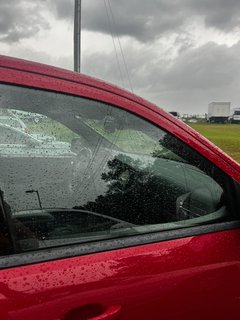
Moisture is a friend during urethane cure, but only as humidity in the air or controlled Camden windshield repair primer flashes. Water droplets on the pinch weld or glass contaminate the bond. In steady rain, mobile technicians use canopies or pop-up shelters that extend several feet beyond the vehicle footprint. If you can provide a garage or carport, even better. The goal is a dry, still pocket where glass can be primed, lifted, set, and taped without wind-driven spray.
Surface prep is the part most people never see, and it matters most on wet days. After removing the broken windshield, the technician trims the old urethane bead to a uniform height, usually a thin layer that looks like a dark gasket. They do not strip the frame to bare metal unless there is rust or a previous installer left a mess. Exposed metal needs primer, and primer needs time. In rain, any delay raises the odds of condensation. A careful tech will warm the area, wipe down with lint-free towels, and verify that the pinch weld is bone-dry before priming.
Two specific judgment calls come up when forecasting showers. First, if squalls are intermittent, the tech may stage the job to fit the dry windows: trim and prep during a dry spell, pause under cover, then set glass the moment conditions stabilize. Second, if rain is relentless and there is no cover, the right answer is to reschedule. No reputable outfit wants to risk a compromised bond. If you see the forecast slipping the wrong way, call early so you aren’t stuck with a hurried decision at your curb.
After a wet-weather install, expect a conservative drive-away time. Even though moisture can accelerate cure, temperature drops and windchill slow it. If you need to drive soon after, ask about high-viscosity, cold-applied urethanes designed for faster safe times; they cost more and require tight process control, but they exist for precisely this use case.
Heat plays by its own rules
Summer work has a different rhythm. Windshields parked in direct sun can hit 140 to 170 degrees Fahrenheit. Glass that hot can stress-crack if chilled unevenly, and primer solvents flash too fast to do their job. Technicians will either move the car into shade or cool the glass gradually with ambient air, never with cold water. If you can park under a tree line or building shadow for an hour before the appointment, it helps immensely.
Adhesives also thin out as temperatures climb. A bead that looks perfect at 95 degrees can slump and thin when the glass is set, leaving gaps near corners or around camera brackets. Pros compensate by altering bead height and gun speed, but there is only so much physics you can cheat. The cure is also quicker in warm, moderately humid air, which sounds good, but you still need the polymer to build strength evenly. Expect the technician to adjust the safe drive-away time downward a bit if conditions are favorable, though many will stick to the conservative end to protect calibration accuracy for ADAS cameras.
Another heat factor: peripheral components. Moldings, cowl panels, and clips get flexible in hot sun and can deform if handled rough. Black plastic at 150 degrees behaves like a gummy eraser. Slower hands and proper clip tools keep you from ending the day with rattles and loose trim.
If your car has a forward-facing camera or rain sensor, it will likely require a calibration after the glass is replaced. Heat shimmer on a blazing day can interfere with static calibration targets; some technicians prefer dynamic on-road calibration in those conditions. Either way, plan extra time. Trying to rush ADAS calibration in heat is how you end up with lane-keeping errors later.
Cold weather requires patience and sometimes power
Below about 50 degrees, cure kinetics slow noticeably, and your safe drive-away time stretches. Below freezing, some urethanes still work with the right primers and surface conditioning, but you have to control the environment. Mobile crews carry 12-volt or battery-powered heat guns, IR lamps, and sometimes compact cabin heaters to warm the glass edge and the pinch weld to a workable baseline, usually in the 60 to 70 degree range. The warming should be gradual and even, not spotty. Too much heat in one corner, and you risk creating stresses that show up as a crack days later.
Cold also pulls humidity out of the air, which can slow moisture-cure urethane. Technicians counter that by using products formulated for low-temperature cure and by watching the dew point. If the glass or metal sits near the dew point, condensation can form invisibly as the car is moved from a warm garage to cold air. Wiping won’t catch it all. For this reason, many winter installs go best in an enclosed garage with the door cracked for ventilation. If you don’t have a garage, an attached carport with windbreaks and a small space heater at a respectful distance can get the job done safely.
One more cold-weather detail: wiper blades and cowl grilles stiffen and crack when flexed at low temps. A careful tech warms them before removal and taps clips loose instead of prying hard. Little touches, but they separate a quiet, factory-like finish from a noisy one.
What your technician is evaluating on arrival
Look over a professional’s shoulder, and you’ll see the same routine every time, weather or not. These are the moments that quietly dictate how well your replacement holds up.
- Assessing visibility and wind: enough light to spot chips on the new glass, and little enough wind to keep dust out of the bonding area. Checking the pinch weld: no rust, no paint lift. If rust is present, the job turns from replace to repair then replace, which lengthens the appointment and may merit shop work. Measuring the bead: the height and shape of the urethane bead change with temperature. The installer will alter the nozzle cut and gun angle accordingly. Confirming adhesives and primers: matching the product to the conditions and your vehicle’s OEM requirements, and updating the safe drive-away time based on the day’s environment. Planning calibration: deciding whether static, dynamic, or dual-stage calibration fits the car, the route, and the weather.
That short list should translate into a brief conversation with you. If it doesn’t, ask. A few minutes of transparency saves misunderstandings later.
Aftercare that actually matters
You will hear a handful of standard instructions. Some are practical, some are habit. Done right, they protect the bond and prevent trim distortion while the urethane builds strength.
Leave the retention tape in place for at least 24 hours. It stops slip at the top and corners as the adhesive sets, especially on hot days when the bead wants to relax. Keep doors cracked or vents slightly open when parked in full sun for the same period. Pressure spikes in a sealed cabin can nudge the glass outward a hair, and elastic urethane will move if asked. Avoid slamming doors and driving on rutted roads right away.
Skip power washes for 48 hours and automatic car washes for 72. High-pressure water can force its way under moldings and disturb a bead that has not skinned fully. You can hand wash gently with a low-flow hose after the first day if needed. Do not scrape or razor the new glass near the edge during the first week; if there is tape residue, use a mild adhesive remover and a microfiber towel.
Some installers suggest leaving a window cracked the first night, others are indifferent. My take: if the car will sit in a garage or the night will be cool, crack it. If you park on a city street or security is a concern, skip it. The pressure change risk is small once the bead skins, usually within an hour or two, but the benefit is real on very hot afternoons.
Finally, pay attention to the wipers. If they chatter or streak badly after the replacement, replace the blades. Old blades harden and can oscillate on fresh glass, and they wear grooves into the hydrophobic coating some windshields carry at the factory. New blades are cheap insurance.
When a mobile job should become a shop job
Mobile service is convenient, and a good crew can do flawless work in your driveway. There are times when the variables stack up against you.
- Heavy, continuous rain without access to a covered space. Subfreezing temperatures with strong wind and no enclosure. Severe rust at the pinch weld that requires grinding, rust converter, primer cure, and repaint before bonding. Complex ADAS calibrations that need multi-target setups or controlled lighting the field cannot provide. Specialty vehicles with bonded trim, unique adhesives, or frameless glass that demands precise fixturing.
If any of these apply, a reputable provider will say so upfront. It is better to spend an extra day at a shop than to fight a messy repair later.
How to evaluate providers and quotes without getting lost
Search engines surface dozens of results when you type auto glass near me. The top slots usually belong to larger networks, followed by local shops. Size isn’t everything, but process control matters more than marketing. You want a company that trains technicians on adhesives and calibration, not just on glass handling.
When you request a windshield quote or a general auto glass quote, be ready with specifics: year, make, model, exact trim, presence of a forward camera, lane-departure sensors, heated wiper park area, acoustic glass, and rain sensor. Those features change the part number, and the part number drives cost and calibration steps. If the representative doesn’t ask about them, that’s a flag.
Expect quotes to range widely. On a common sedan, you might see 300 to 700 dollars for standard glass and labor, plus 100 to 400 for calibration. Luxury models or vehicles with heads-up display and infrared coatings can jump to 1,000 to 2,000 dollars. Mobile service often carries a modest surcharge, and some providers waive it within a set radius. Ask for the adhesive brand and the safe drive-away time corresponding to your day’s forecast. A clear answer signals competence.
Check whether the quote includes new moldings and clips. Some cars tolerate reuse, others don’t. Cheap jobs cut corners on those small parts. Also ask about warranty length and coverage. A common standard is lifetime against leaks and stress cracks related to installation, but not against impacts. If you hear 90 days, dig deeper.
Insurance can complicate or simplify things. If you carry comprehensive coverage, most insurers will cover windshield replacement minus your deductible. Many providers handle the claim for you. Make sure the shop is in-network if that matters to your rates, but remember you usually have the right to choose your vendor. Price should not be the only factor. I would pick a shop that talks about their primers and their calibration suite over one that only touts speed.
The ADAS calibration reality
If your car has a camera behind the windshield, the new glass changes optical properties just enough to require calibration. That can be static, with printed targets and precise distances and lighting, dynamic on the road at a specified speed and lane quality, or both. Weather influences which path works. Rain can make dynamic calibration slow or impossible if road markings are obscured. Heat shimmer and strong sun angle can foul camera detection of targets in static setups. Colder days are usually fine, but glare off snow can trick systems.
A prepared technician will bring or schedule the right calibration. Some mobile vans carry compact target sets for static work under a carport, others partner with shops for the calibration step. Clarify before the appointment: will calibration happen immediately after the install, or will you need a separate visit? If it’s dynamic, plan a route that avoids heavy traffic and poor markings. Good providers won’t guess; they’ll follow the OEM procedure.
Material quality and small parts you should care about
Not all glass is equal. OEM windshields carry the automaker’s logo and meet exacting specs for optical distortion, acoustic damping, coatings, and bracket placement. High-quality aftermarket glass often matches those specs in function, though it may differ slightly in tint or noise signature. Lower-tier aftermarket panels occasionally show distortion in the driver’s field or imperfect ceramic frit borders. If you’re sensitive to optics, say so and lean toward OEM or top-tier aftermarket.
Adhesives are less visible but more important. Look for urethane that meets or exceeds FMVSS 212/208 standards for windshield retention with airbags and has published safe drive-away data. Brands aside, the installer must manage shelf life, open time, and primer compatibility. Ask them to date-check the tube. Adhesive older than its shelf life is a nonstarter.
Then there are the tiny parts: rain sensor gels, camera brackets, mirror mounts, and VIN window masks. These are easy to botch quietly. A fogged rain sensor gel causes wiper weirdness. A crooked bracket creates calibration headaches. A good technician preps those parts carefully and aligns them with jigs, not eyeballing.
Troubleshooting small issues after the install
Even perfect installs can need small adjustments. If you hear a soft whistle at highway speed near a corner, it may be a molding not seated fully. A quick press or clip swap fixes it. A musty smell during the first week could be trapped moisture in the cowl; a warm, dry day and open vents usually clear it. Any visible water drip during a car wash is not normal. Call the installer. They’ll water-test, find the breach, and reseal where needed.
If the glass cracks within the first few days without an impact, report it. Stress cracks often start at the edge and run a short distance with a smooth, clean origin point. Impact cracks show a pit or chip at the start. Installers will examine the fracture and own it if it’s a stress issue tied to seating or thermal shock. This is where warranty quality shows.
If ADAS warnings pop up, don’t ignore them. Miscalibration can be subtle at first, then show as lane-centering drift or premature braking alerts. Schedule a re-check. Good shops build calibration verification into their process and will re-run it at no charge if readings drift after a day of driving.
What to plan for on the day of service
The typical mobile windshield replacement takes 60 to 120 minutes, plus any calibration time. Add buffer for weather. On a hot, still day, the safe drive-away might be 30 to 60 minutes after glass set. On a cold day, plan for 60 to 120 minutes of cure time before driving, sometimes longer if the product and conditions demand it. If the forecast is marginal, ask the scheduler to book a morning slot. Morning air tends to be calmer, surfaces are drier, and you have the rest of the day as a weather cushion.
Payment and paperwork usually wrap up after the set and tape. You’ll receive a receipt, a warranty card, and often a sticker noting the safe drive-away time. Take photos of the glass edges and trim while it’s pristine. If something shifts later, you have a reference.
Pulling it together
Mobile windshield replacement works in rain, heat, and cold when the technician controls the variables: dryness during bonding, temperatures within product limits, and clean surfaces. Your contribution is space and timing. Provide cover where you can, shade when it’s hot, and a windbreak when it’s gusty. Expect conservative drive-away times in poor weather and insist on clarity around adhesives and calibration. When you search for auto glass near me and start comparing providers, weigh more than the lowest windshield quote. The cheapest auto glass replacement often saves dollars up front and spends them back in leaks, wind noise, or misaligned cameras.
If you’re unsure about timing, ask for an auto glass quote that includes a weather plan. A seasoned outfit will tell you how they handle a surprise squall, a heat wave, or a cold snap, and whether they’d rather see you at the shop. That kind of candor is a better predictor of a quiet, safe windshield than any coupon code.
The last miles are yours. Keep the tape on, close doors gently, skip the power wash for a couple of days, and watch for any telltales. When handled with respect for the materials and the elements, a mobile install can match the best shop work. The weather only wins when process and patience give up first.